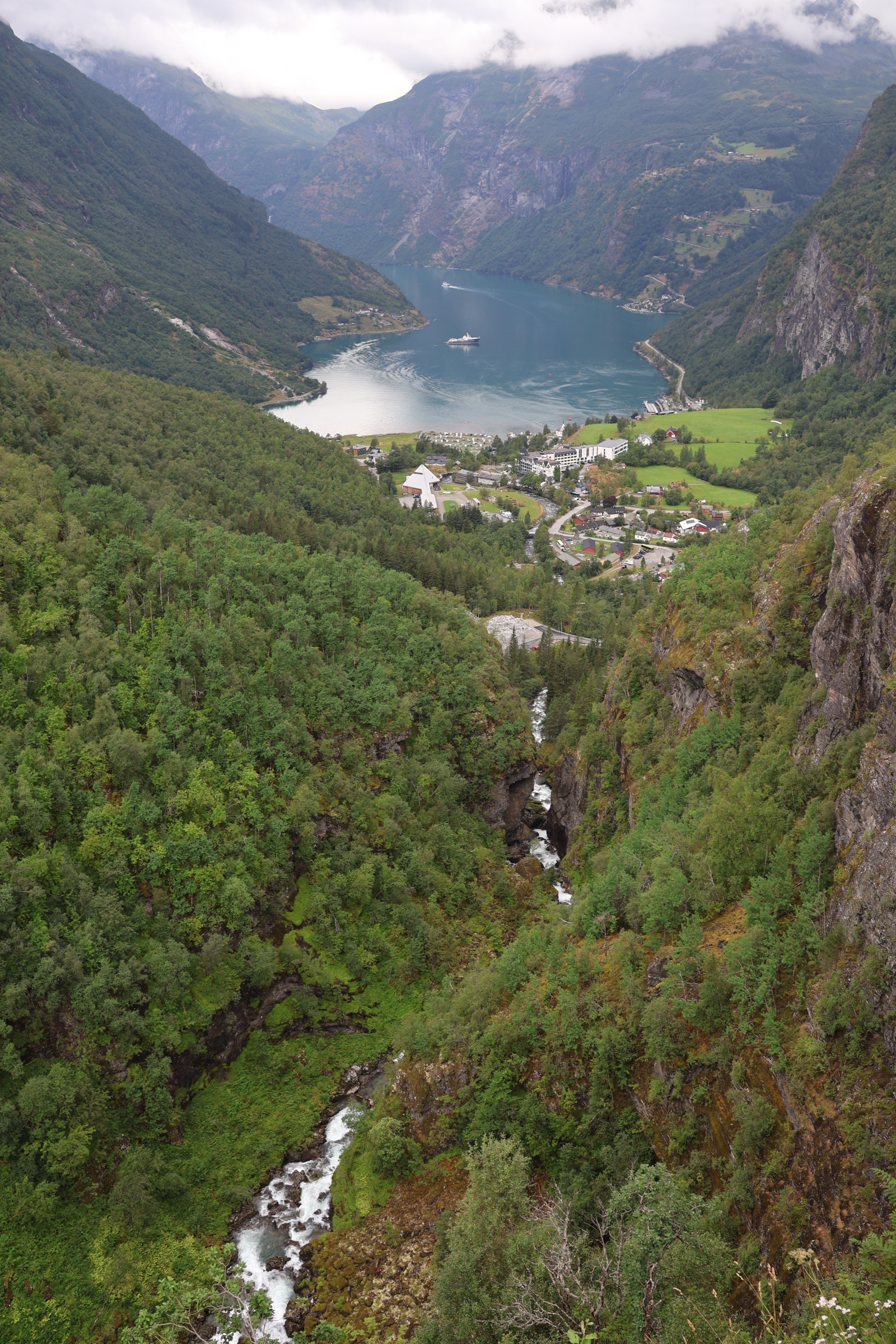
Fjords 27 – 29July
Norway’s fjord country is a world-class landscape, the standard reference point for overdeepened glacial valleys flooded by the sea. The efforts of people to live and farm, and now to take their vacations and recreation there are awesome. The words that kept coming to mind were “mad” and “bonkers”, but all we can do is take it all in and admire.
Main Destinations
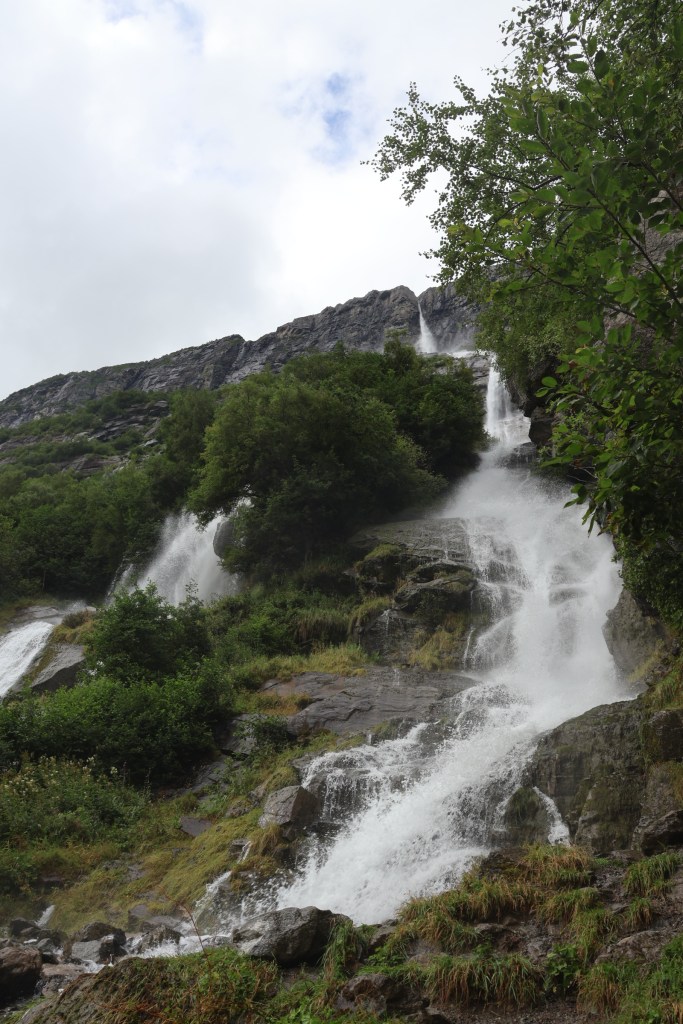
Vinnu
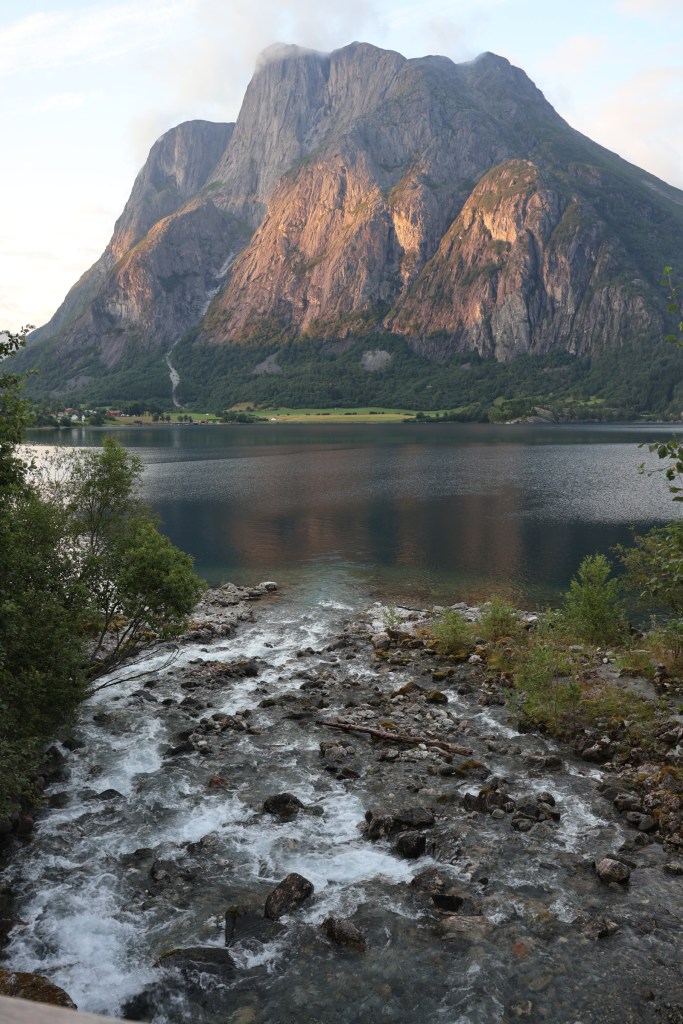
Eikesdal
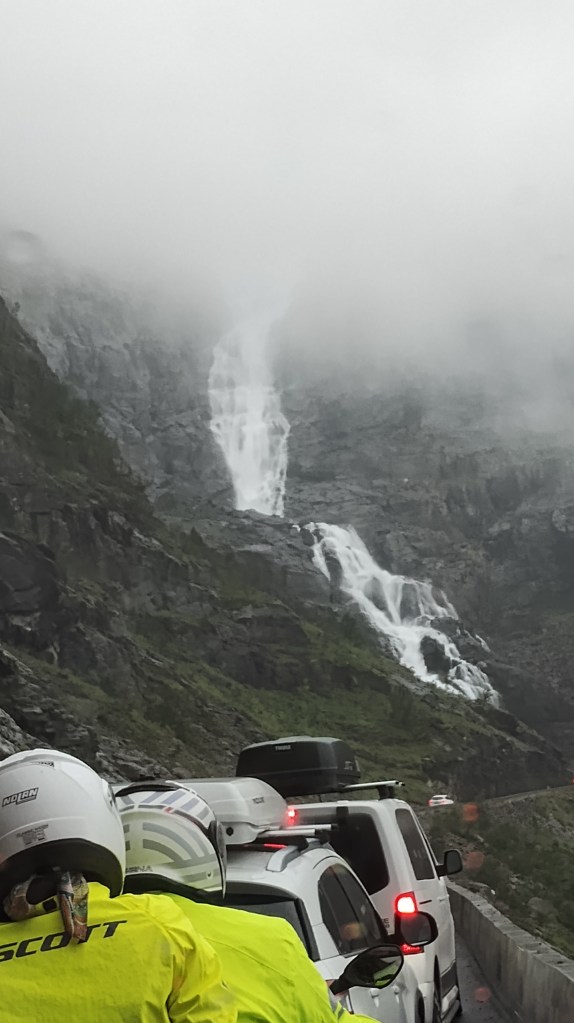
Trollstig
Vinnu is Norway’s highest waterfall, claimed highest in Europe and 6th highest in the world. It drops 800m into Sunndalen, a major through-route from east to west.
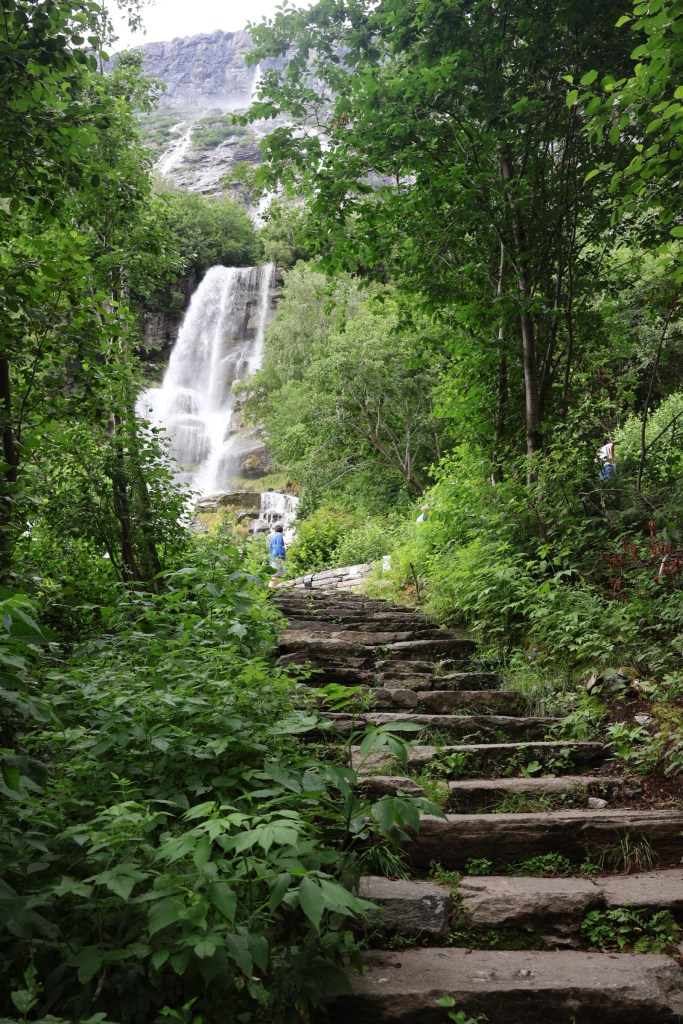
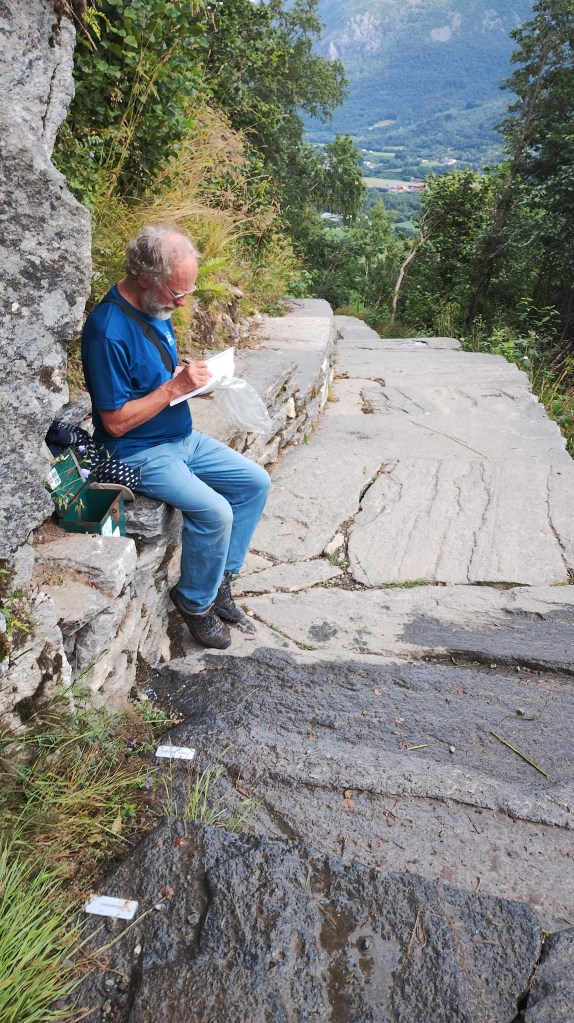
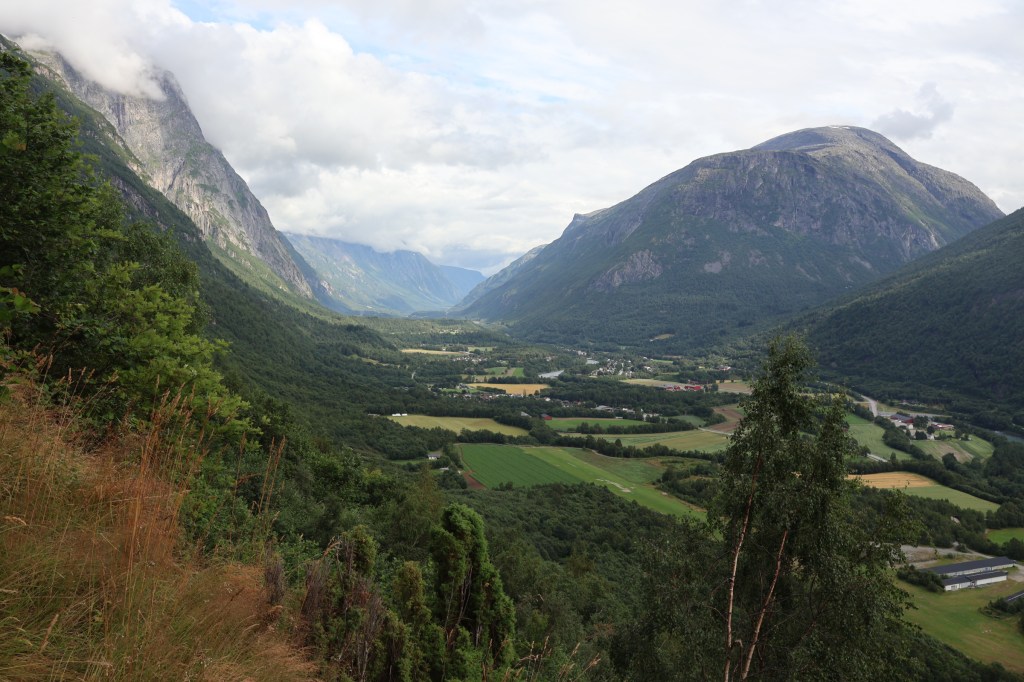
There is a lot of tourist interest (and exploitation), and a stairway, built by Sherpas (a Sherpatrapp) has been started to take people up to the top of the falls. Donations of kr. 2000 (about £140) were invited to sponsor a step. We climbed 600 without knowing how many had been completed. Thankfully, #632 was the top one.
Down at the fjord, the road avoids some of the tortures of travelling normally on the surface and is tunnelled through mountains alongside. It emerges peacefully at Eresfjord and shortly inland is a long lake – a fjord that has been separated from the sea when the land rose after the last Ice Age.
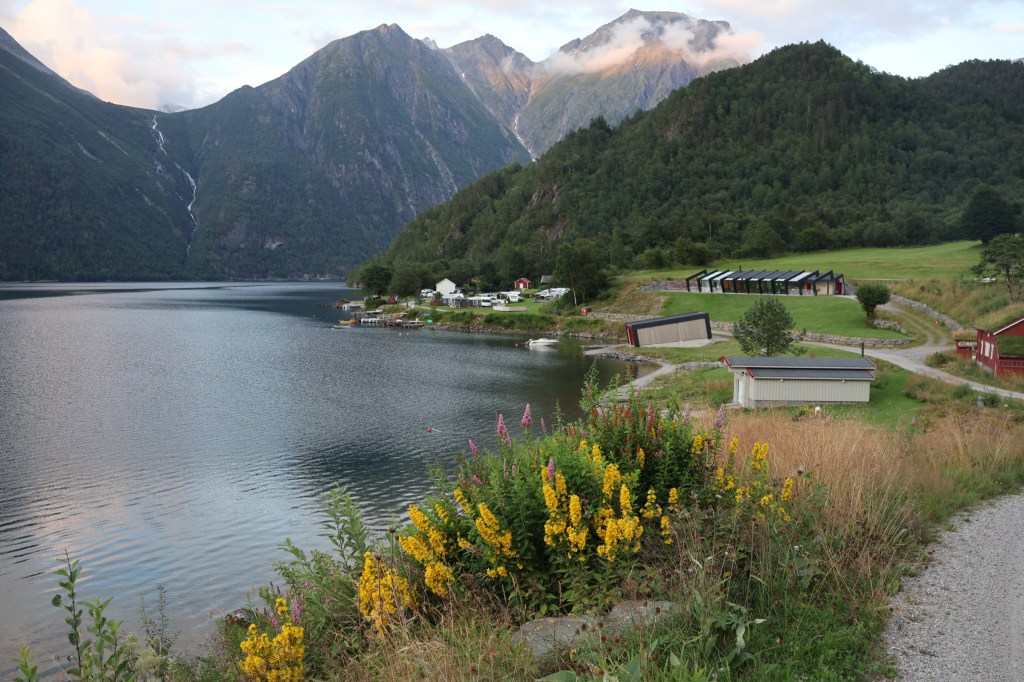
We have been to Romsdal and Trollstig Pass before (June 1987) and were treated to some changes, some good (the Trollstig centre), some bad.
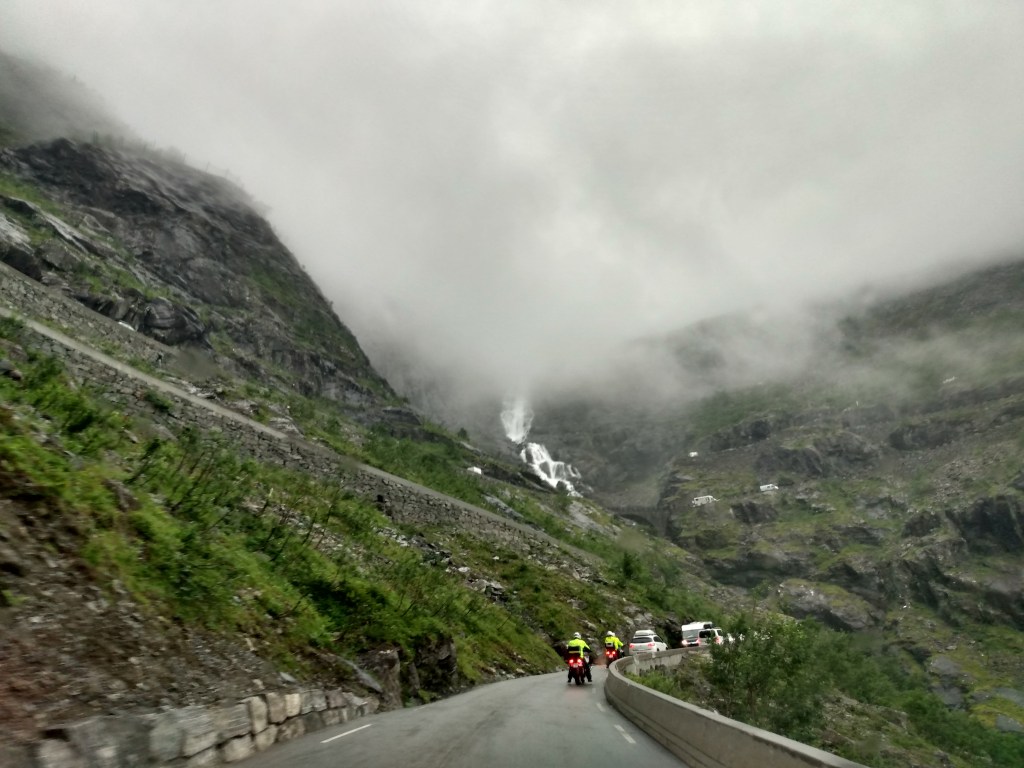
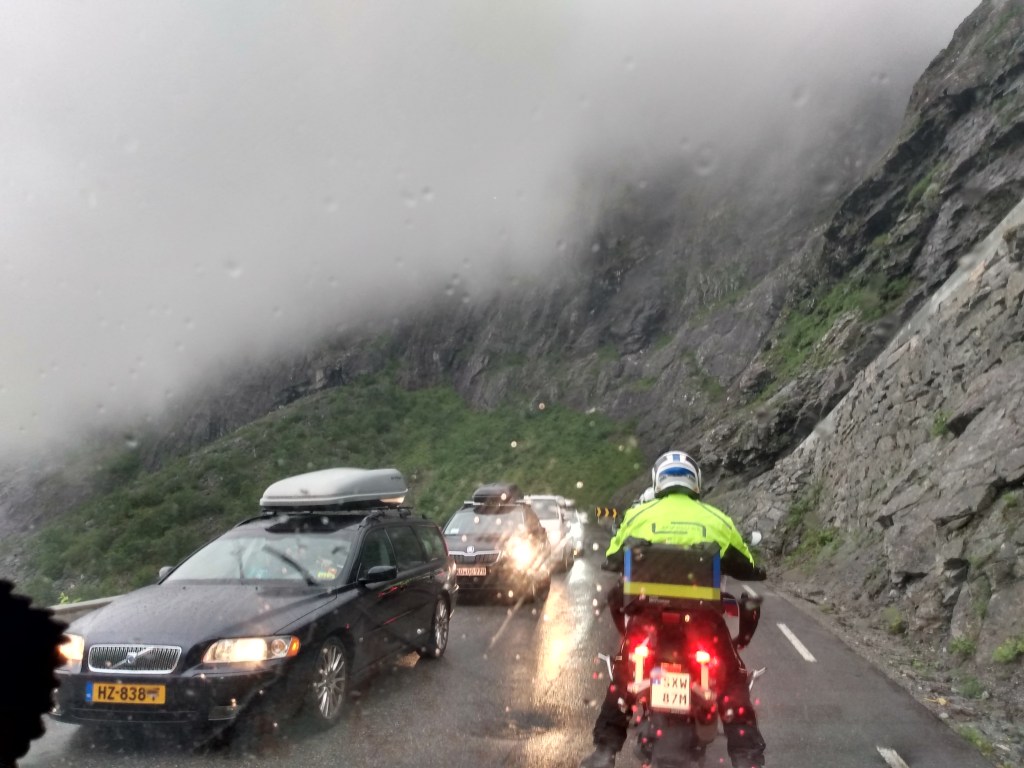
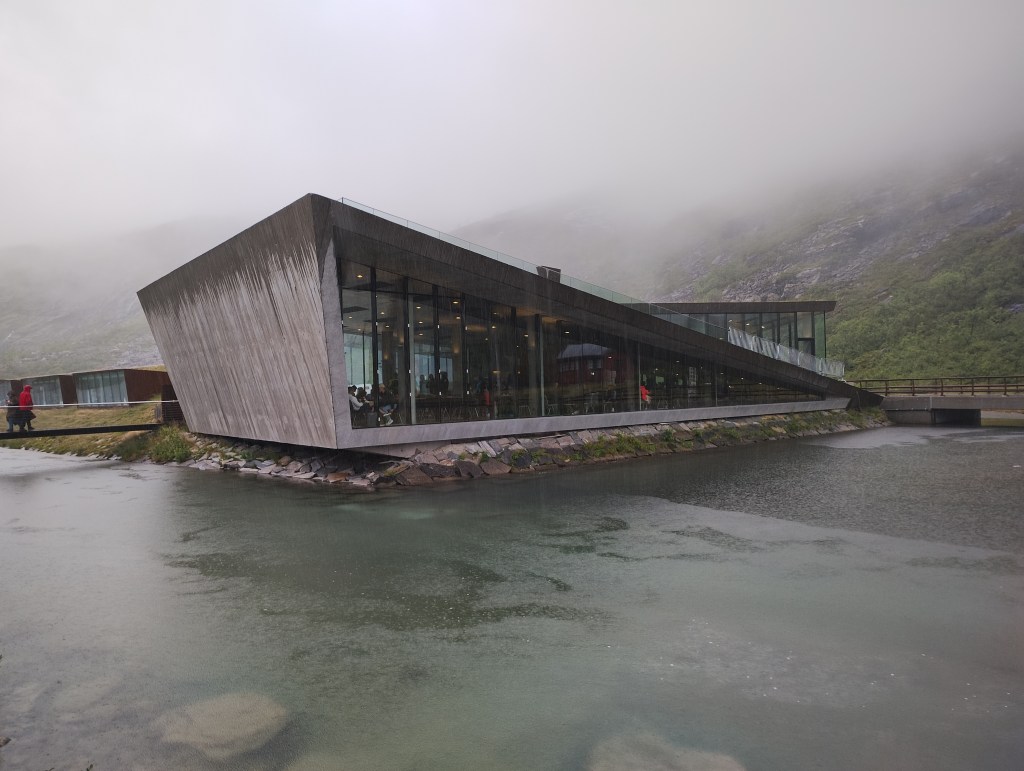
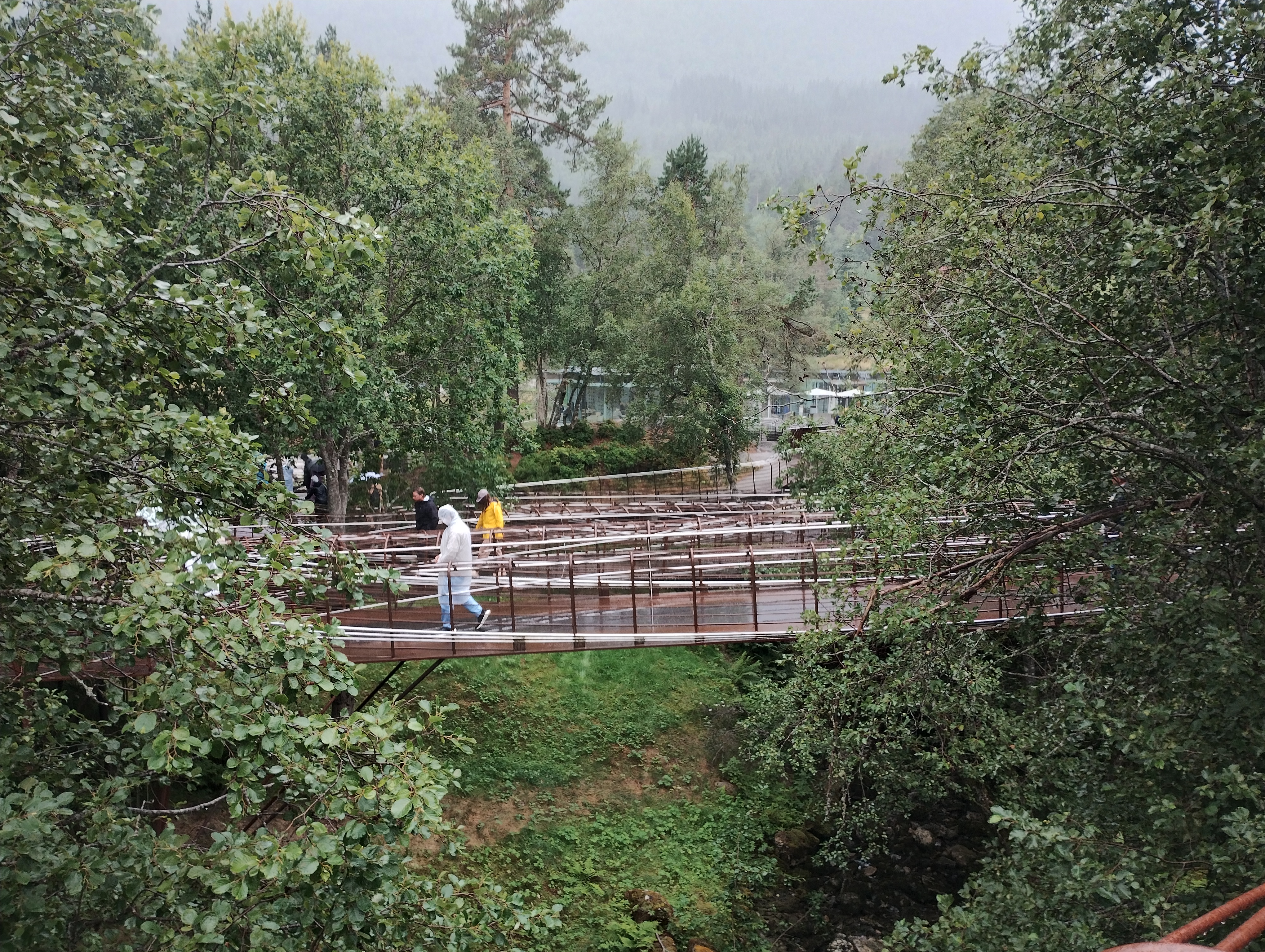
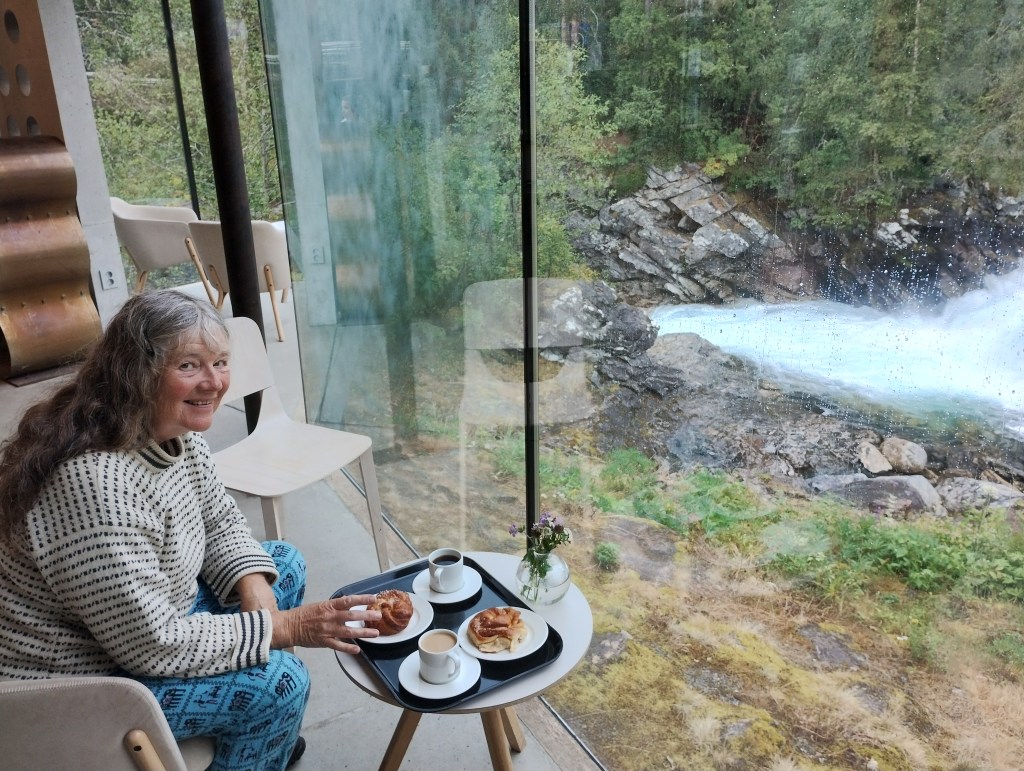
Despite the weather, the landscape was grand, wild and mountainous. Only the road was unpleasant. At one point in the dale beyond, the river bores through the rock, making a convenient crossing point for the road. The assoiated viewing platforms and walkways were – er – interesting, but the nearby cafe and shop achieved a distinctive quality provision that was clean, efficient, friendly and tasty. We loved their flow chart.
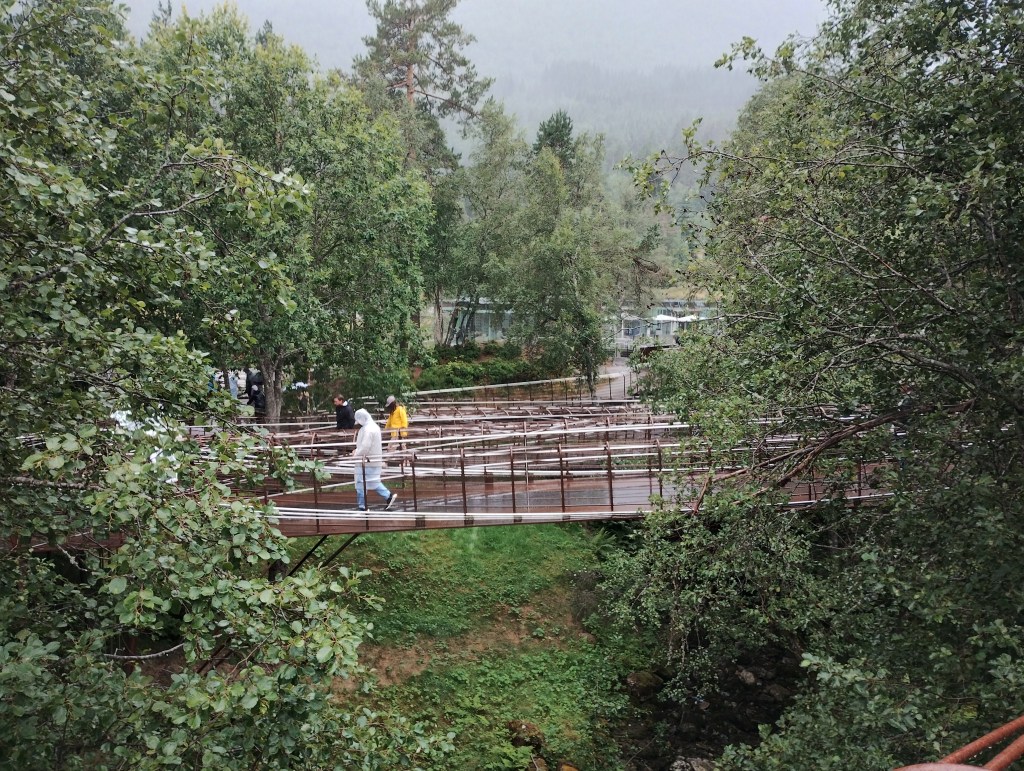
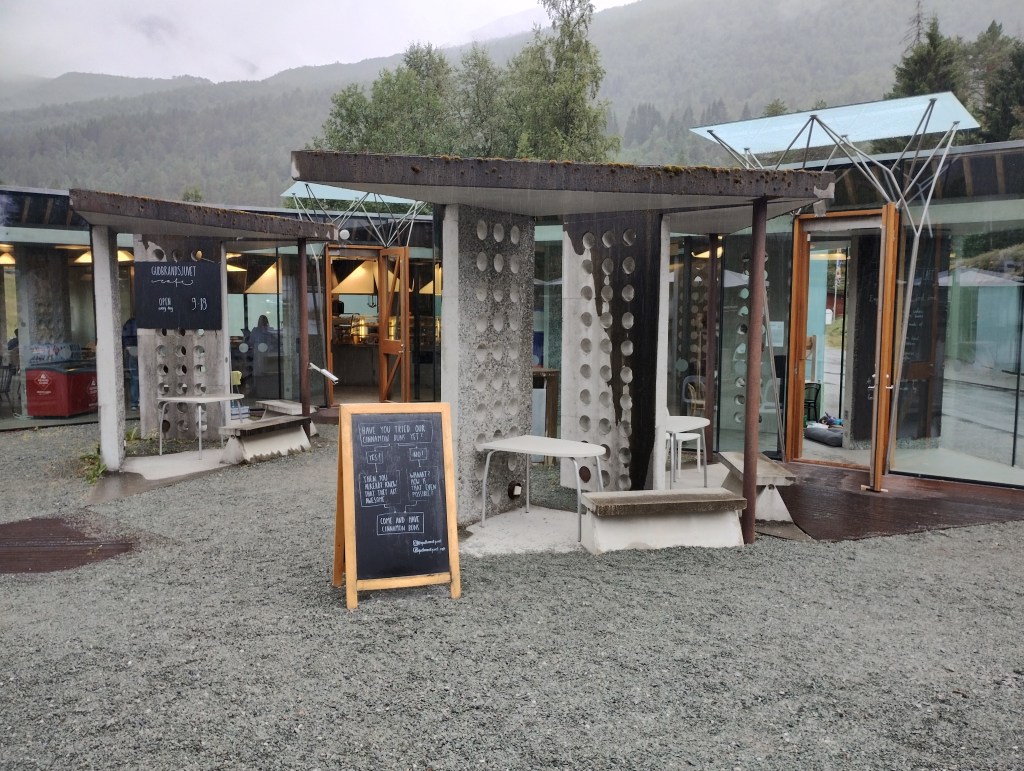
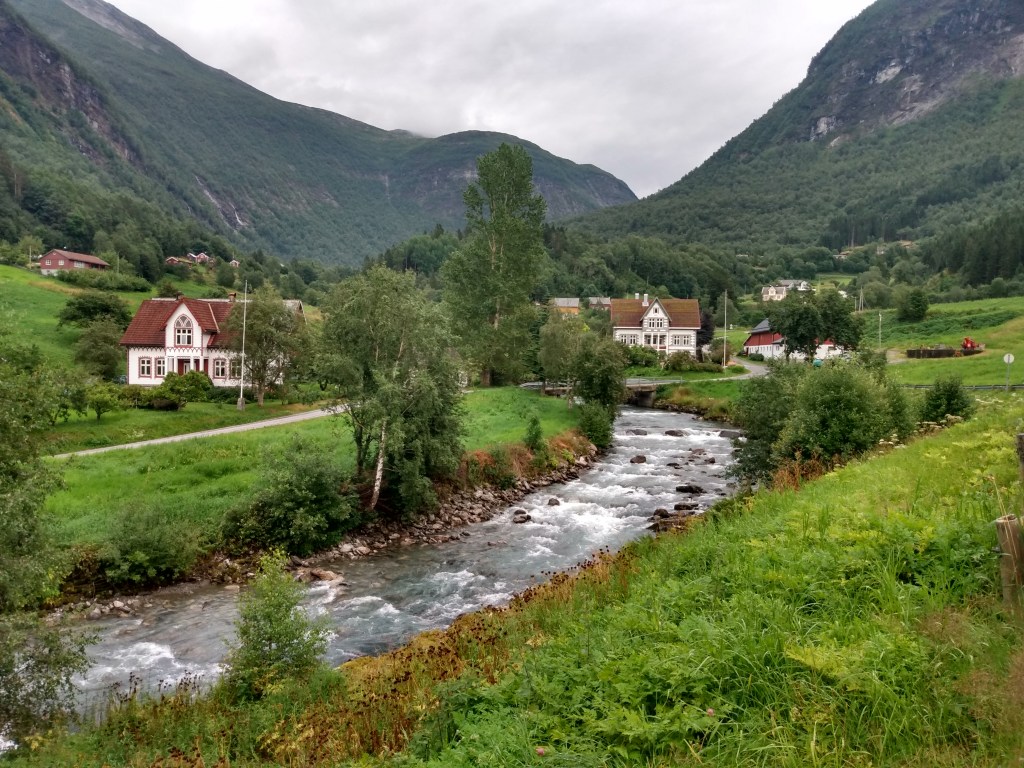
A ferry took us across another fjord to Eidsdal and we turned aside to Norddalen, which was a find. Several brick or stone built houses from the early 20th Century had provided for farmers living in this fertile valley. We saw several orchards and raspberry farms and a productive market garden on our evening walk.
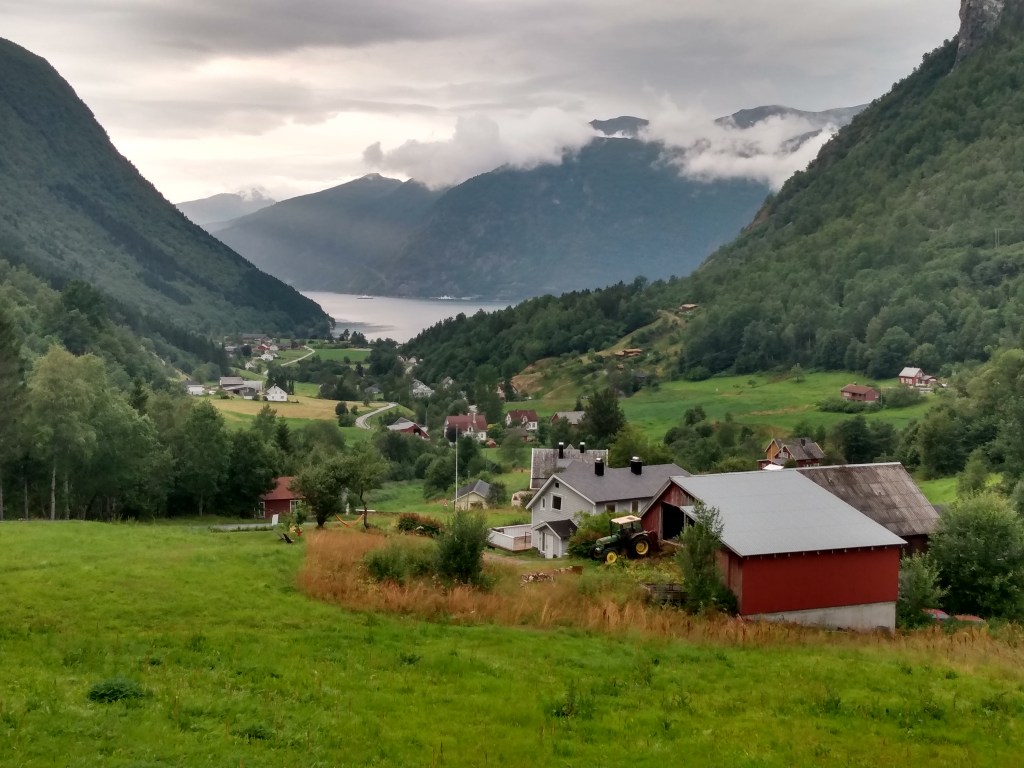
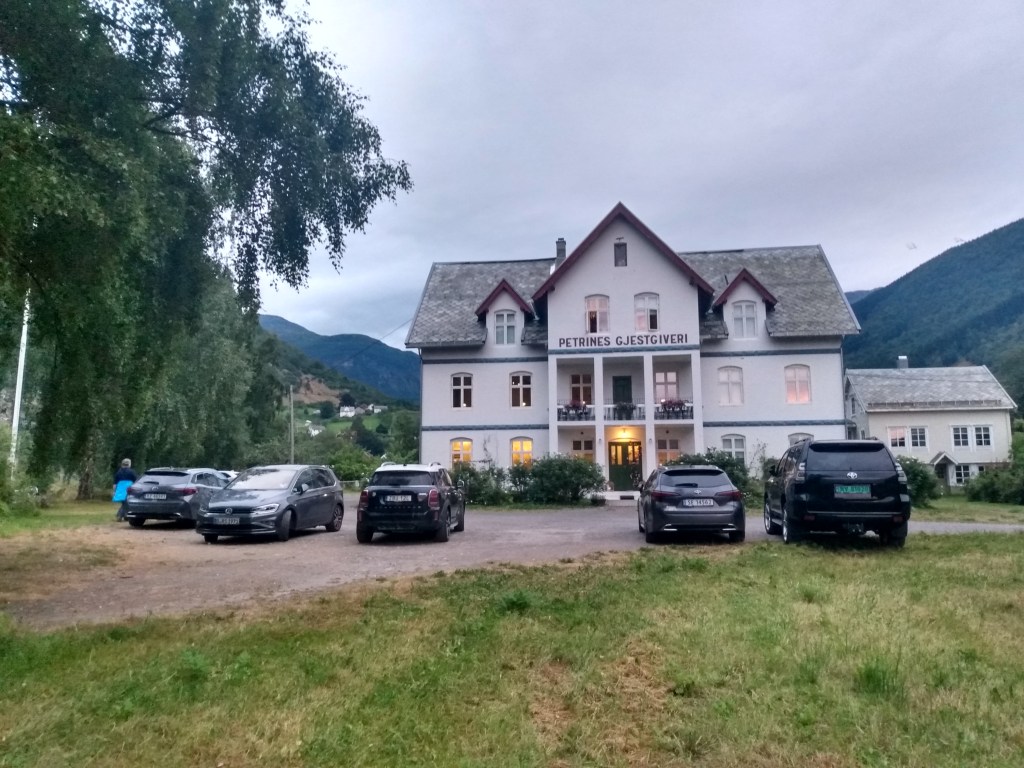
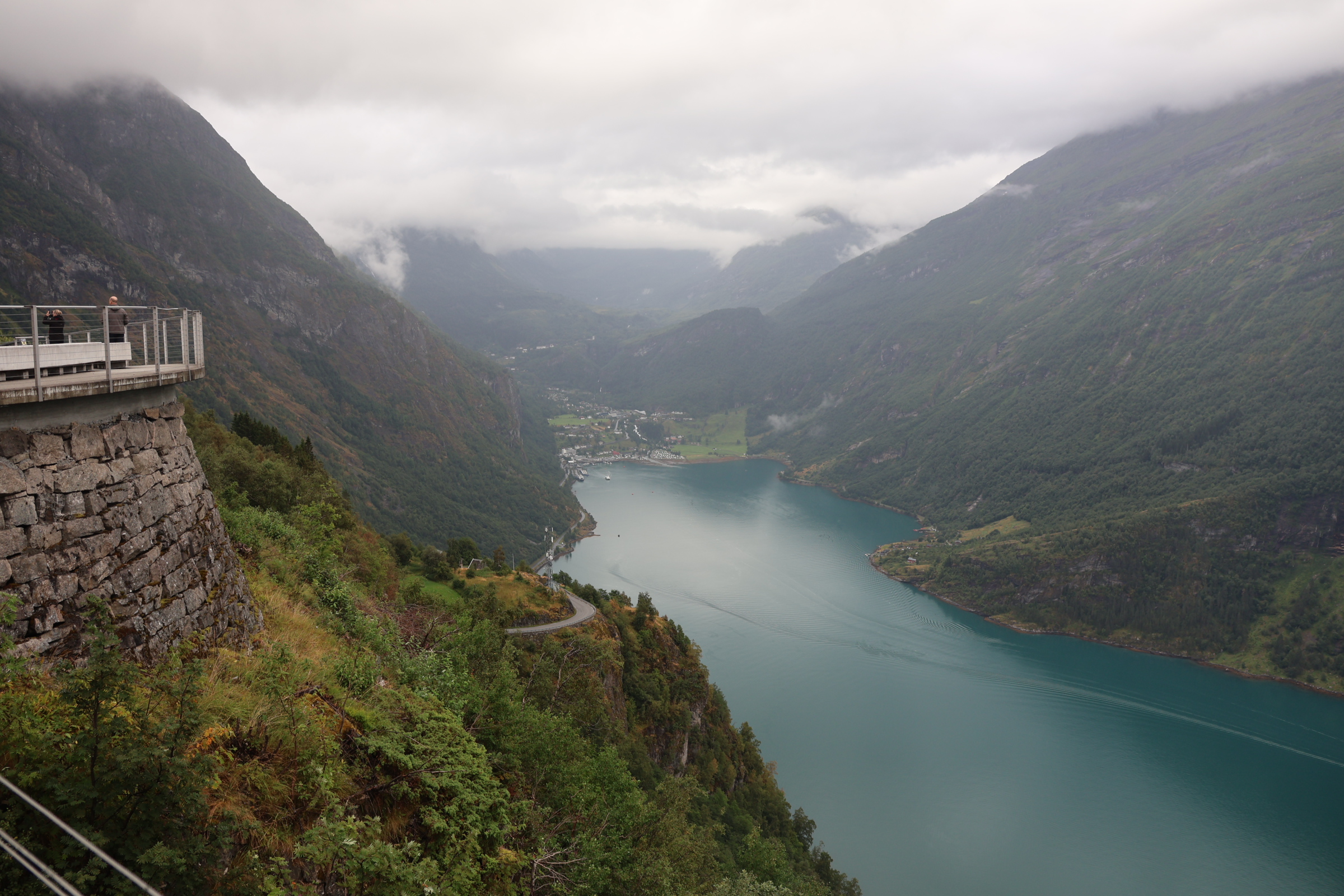
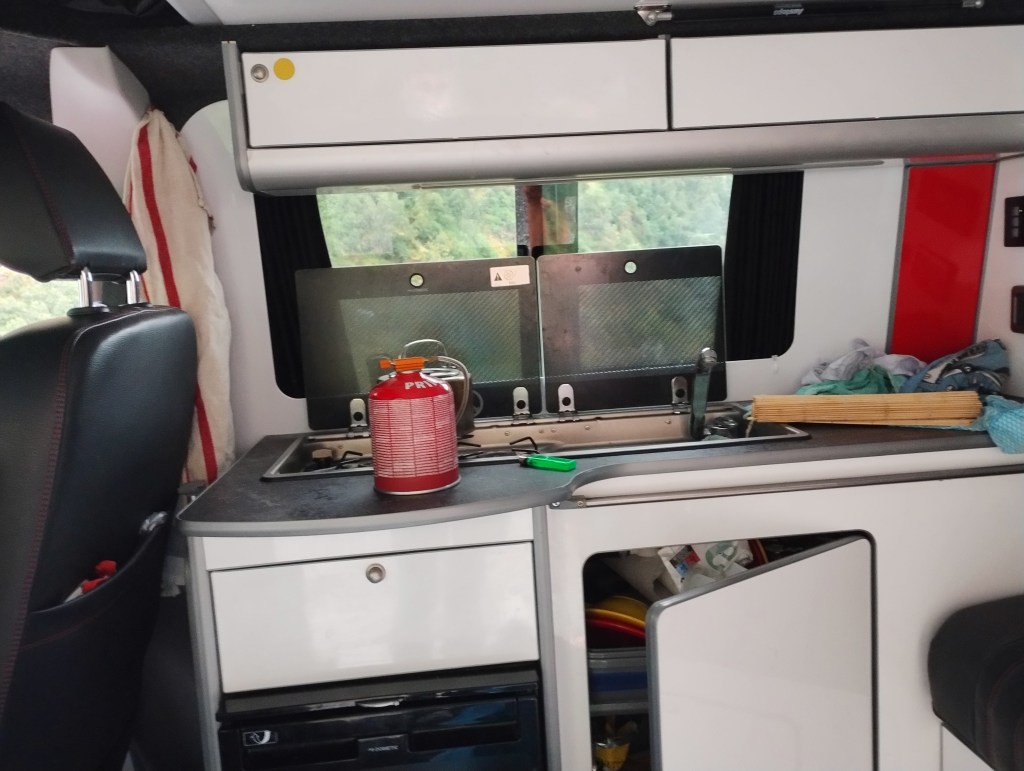
In high anticipation we set off next morning for Geiranger, the most full-on part of this screwed-up landscape. We had to cool our expectations on the precipitous road down to the village, however. There was time to put the kettle on while waiting for a heavy lifting recovery truck come from Andalsnes (over Trollstig).
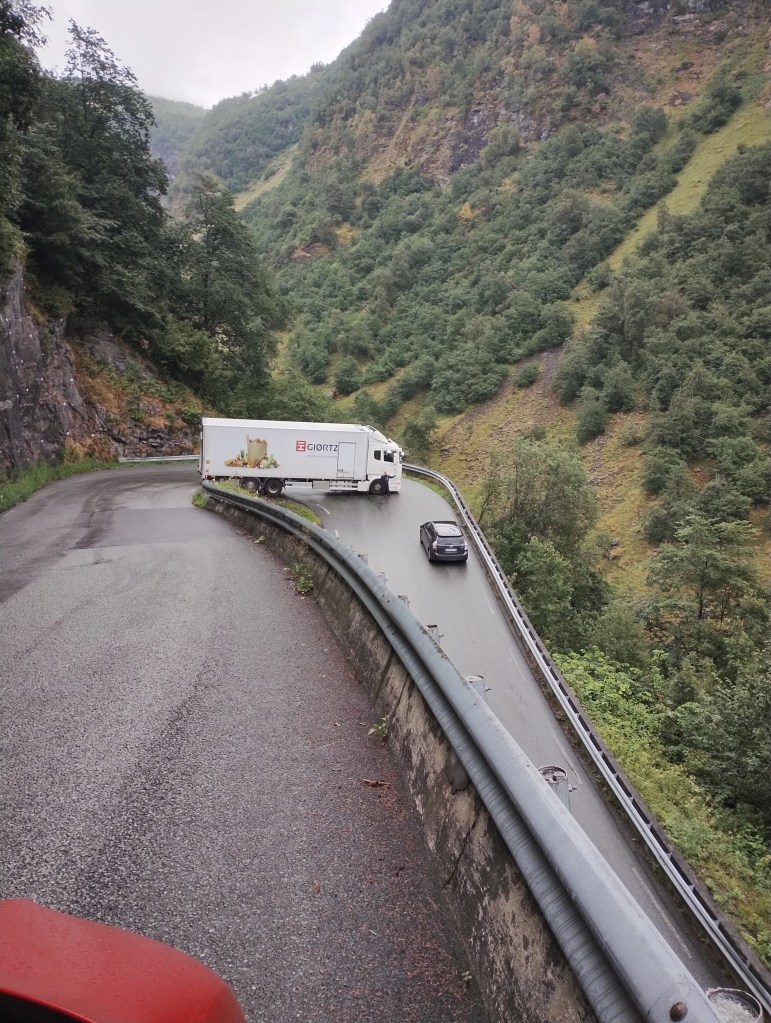
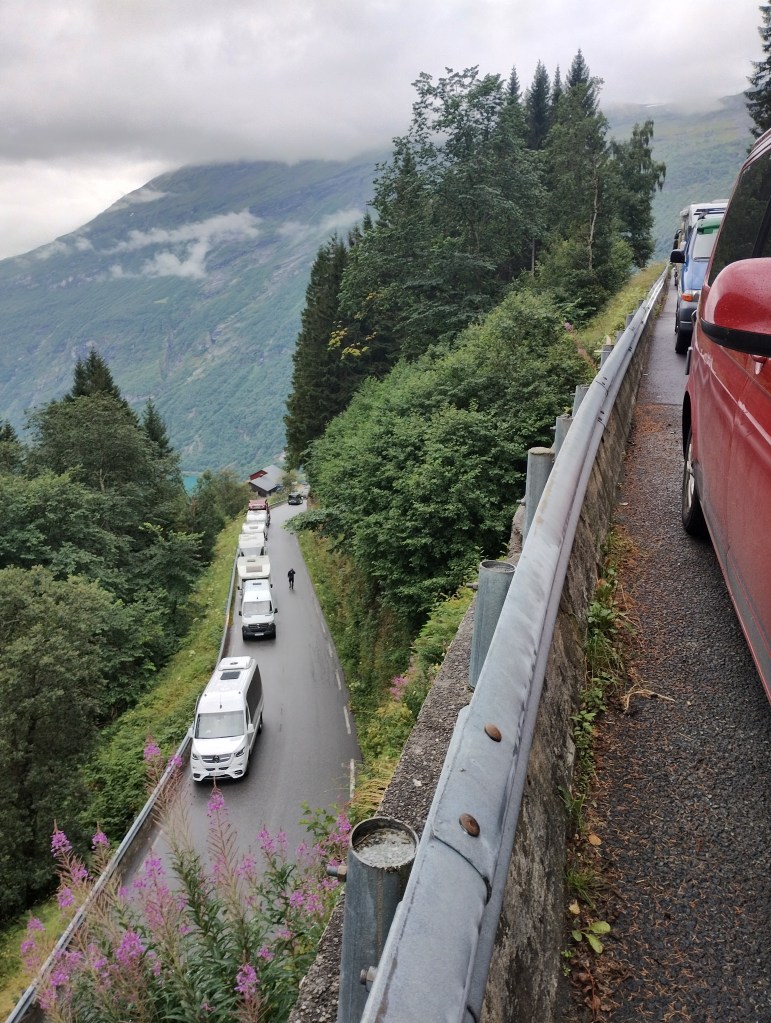
Eventually the driver freed himself and we made it down the white-knuckle ride to Geiranger, where we visited the Norsk fjordcentre. This explained why there are fjords and how people coped living and farming here over the years. There were fjord farms (only accessible by boat) and fjell farms, some only accessible by ladder up cliffs. Don’t know how the cows managed.
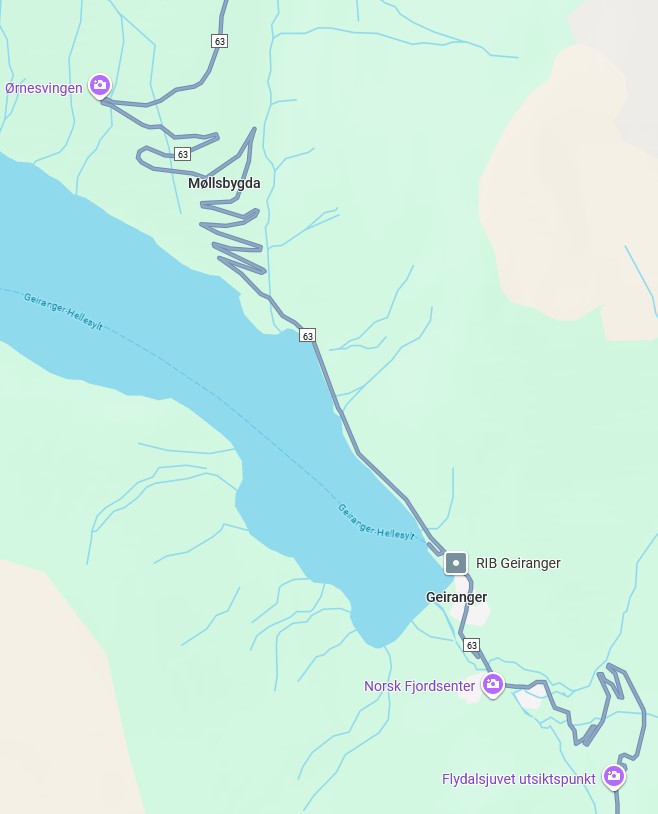
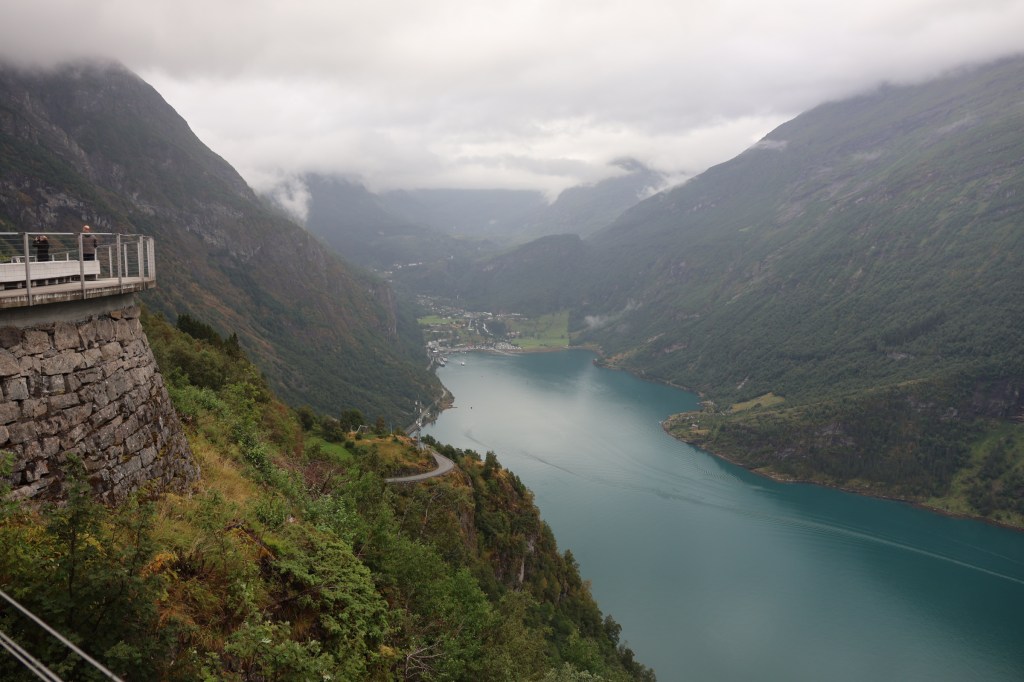
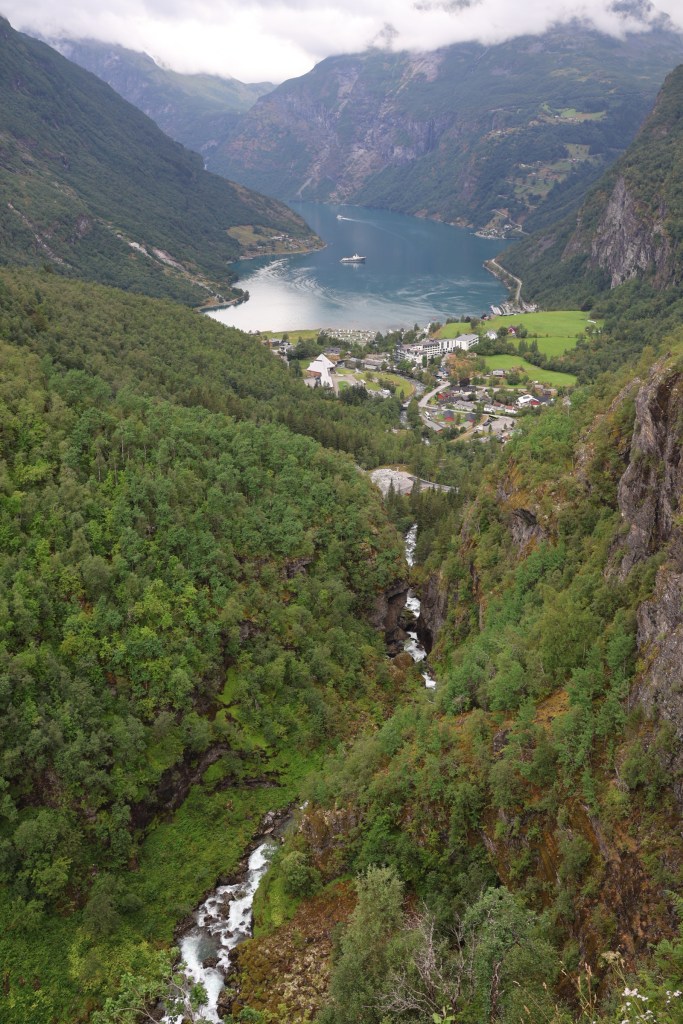
Tortuous in, tortuous out.
We headed east and inland, to cross Norway for the last time.
 Exploring Norway